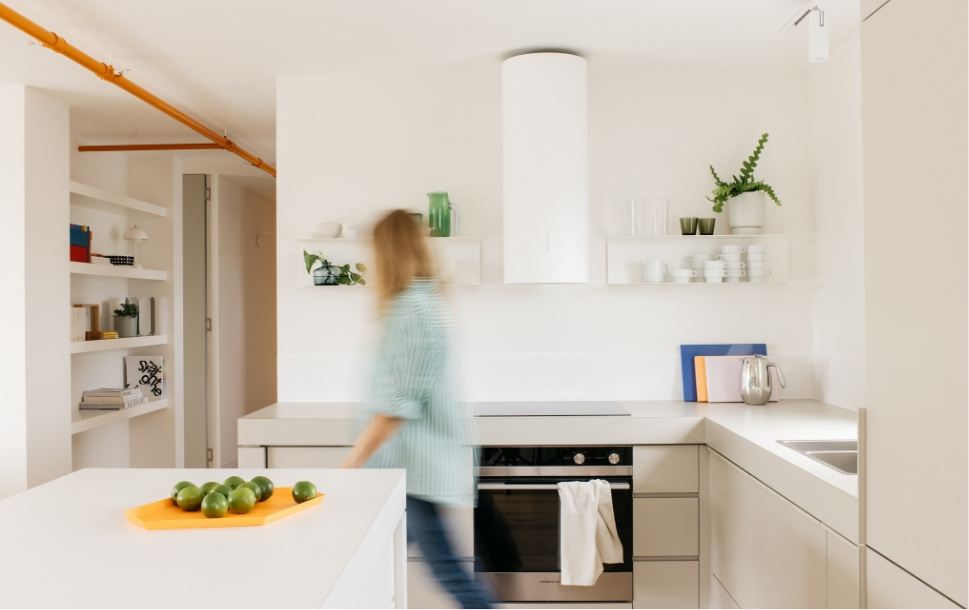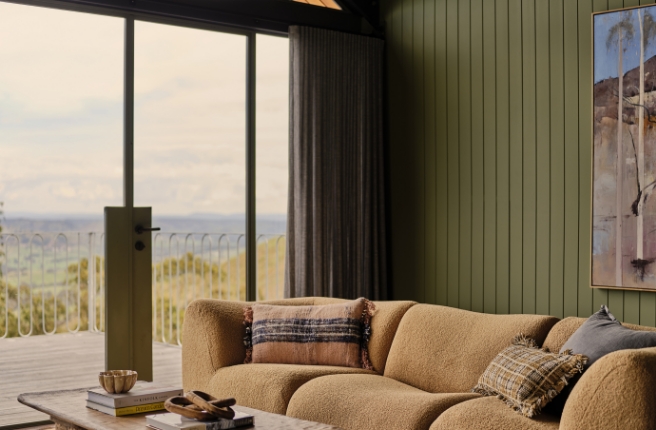



Just in from some Australia’s most famous beaches - think Bondi and Coogee - sits Kensington, a small pocket of old school Sydney. Nestled in the undulating streets, a 70s brick home has been quietly transformed to suit a family of 5, while supporting a lifestyle change aimed at reducing their mortgage and working less. Design and durability met financially practical solutions in a pragmatic renovation that was functional and level-headed while delivering architectural style and an enduring aesthetic.
Successful home design comes in many forms. For some, a great home could be a gallery-like, minimalist box, or perhaps the shabby-chic of a Californian Bungalow might appeal. Others might be attracted to Mid-century’s materiality or 80s Po-Mo bursts of colour. What’s “right” isn’t so much the answer as what fits. And what fits, is what works.
Kensington House by Sam Crawford Architects is a successful home. With the great bones of a 70s brick house, the idea of turning it into the ideal family abode wouldn’t be a stretch, but giving it a feeling of style, making it feel welcome, while on budget would be the challenge.

"They wanted the house that was more robust, one they wouldn’t be worried about finishes and things all the time. They obviously appreciate design and a well thought through space, but this was to be a house for their family, not a museum piece," explains Jarod Grice, Senior Associate at Sam Crawford Architects. “There's some brevity to it that's not overdone, but it's also not so stark that it doesn't feel like you can live in it."
Grice’s hand on this project is a deft one. Kensington House feels instantly warm and approachable. It’s easy to imagine family and friends gathered in the kitchen, kids doing homework or playing in their rooms. The consistency of the palette and its material coherence have established strong motifs and themes – it is whole and complete – but never feels overbearing or aloof.
"I guess it’s warm minimalism,” Grice suggests.

The team made changes only where needed, reconfiguring the entry and creating an open plan kitchen, while creating more bedrooms and adding a bathroom and laundry.
“It was an interesting exercise upstairs. We knocked out some walls so that you had one big living-dining-kitchen area, a little mud room and the parents' bedroom. But then downstairs we did the opposite. We put a whole lot of walls in to give them spaces that were the size that felt right to inhabit and to provide the extra rooms they needed.”
To achieve these results, on such a scale, and with a firm budget, Grice and team used Laminex to realise the vision of the project. Cabinetry is the essence of Kensington House and it has been used with such creative aplomb that the entire home carries a feeling of bespoke and level of personalisation that feels special and elevated – belying the budget adherence - but just to remind one more time, never feels untouchable or unwelcoming – it’s the balance the home strikes that is most impressive.

“It was a very strict budget, remembers Grice, “They said, for this to achieve what we're wanting it to achieve - which is to reduce our costs in life and to live a bit more freely and work a bit less - we need to meet this budget. So, they continually made sacrifices in a lot of ways through the house to achieve that. But one of the ways we said was you can use Laminex, save on joinery and the outcome's still going to be great.”
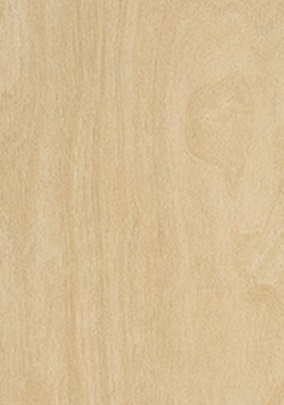
Everywhere decisions were made to avoid being delicate or fussy, making family centric choices that would prolong the life of the home, enable easier living or mean something more for the family as a whole. Grice recalls the kids’ involvement in the design and colour selections for their rooms. Though similar – and still adhering to the home’s overall palette – each room is subtly different using Laminex Raw Birch Ply extensively, then teamed with Laminex Stormcloud, Steel Blue, Spinifex, Seed or Surf for cupboards, doors and benchtops. That the joinery is exemplary is of no surprise.




Credits:
Architecture: Sam Crawford Architects
Builder: SQ Projects
Joiner: Husk & Co
Photography: Brett Boardman
You might also like